

Put your effort where the electrical risk actually is.
Electrical systems power facilities, public infrastructure and renewable generation, and every circuit, piece of equipment and interface carries risk.
Energy Solutions IQ helps organisations manage that risk through an evidence-based, regulator-aligned framework. By aligning inspection, testing and maintenance to system criticality and regulatory requirement, every control is targeted, proportionate and defensible.
The result: fragmented maintenance routines become structured, traceable compliance systems that reduce cost, improve reliability and give regulators, insurers and executives verifiable confidence.

Fixed schedules rarely survive regulatory scrutiny
Traditional maintenance programs run on fixed, time-based schedules rarely informed by consequence. They may satisfy minimum standards, but they seldom stand up to scrutiny or optimise safety.
Regulators expect controls, inspections and decisions to be proportionate to the likelihood and consequence of electrical failure. Risk-based management closes the gap between maintenance activity and compliance.
The questions regulators ask
- Which systems pose the highest danger to life or public safety?
- Where do environment or operations increase hazard probability?
- How would asset failure affect critical services?
- Do inspection and testing regimes reflect these risks?
An outcome-based duty that never switches off
Under electrical safety law, duty holders must keep installations electrically safe at all times. Regulators treat this as an ongoing, dynamic obligation grounded in risk recognition.
Regulators do not ask whether a risk was listed. They ask whether it was understood, tested and proportionately controlled. We link risk assessment outcomes to electrical asset management, inspection and governance so you can prove it.
Auditable, system by system
- Classified by risk exposure and criticality
- Managed under proportionate inspection and maintenance
- Supported by documented decision logic
- Monitored for changes in risk condition over time
Five stages of a risk-based electrical framework
Our methodology draws on more than three decades across regulatory enforcement, incident investigation and high and low-voltage systems, customised to each facility.
System mapping and boundaries
We map every electrical system, from utility interfaces to secondary distribution and control, defining ownership, maintenance responsibility and regulatory accountability.
Criticality assessment
Each asset is classified by consequence of failure: safety, operational disruption, public exposure, environmental effect and cost. The highest-consequence systems get deeper assurance.
Hazard identification and risk rating
Shock, arc flash, ignition and degradation hazards are assessed for likelihood and severity using a structured risk matrix that sets tolerable thresholds.
Proportionate controls
We set inspection intervals, test methods, monitoring and escalation triggers for each risk, validated against standards, codes of practice and regulator guidance.
Evidence and continuous improvement
Findings are traceable through inspection results, defect closure and engineering assessments, and the risk profile is updated as conditions change.
Decisions you can defend
Over-engineering low-risk systems wastes money; under-managing high-risk systems increases exposure. Clear risk matrices and decision pathways determine:
Inspection triggers
When inspection is mandatory and when it is discretionary.
Testing frequency
How often testing or thermographic evaluation is required for each asset class.
Remediation rules
What triggers immediate remediation versus a controlled, documented deferral.
Evidence standards
How control is recorded, reviewed and retained, ready for any regulator question.
What risk-based management delivers
- A documented, regulator-aligned system management framework
- Electrical risk registers linked to asset criticality
- Inspection and maintenance proportionate to consequence
- Fewer reactive incidents and a lower cost of compliance
- Clear board visibility of electrical risk exposure
- Stronger confidence with regulators, insurers and communities
Risk registers integrate with your wider governance through our governance and competency frameworks, and can be monitored live with technology-enabled situational awareness.
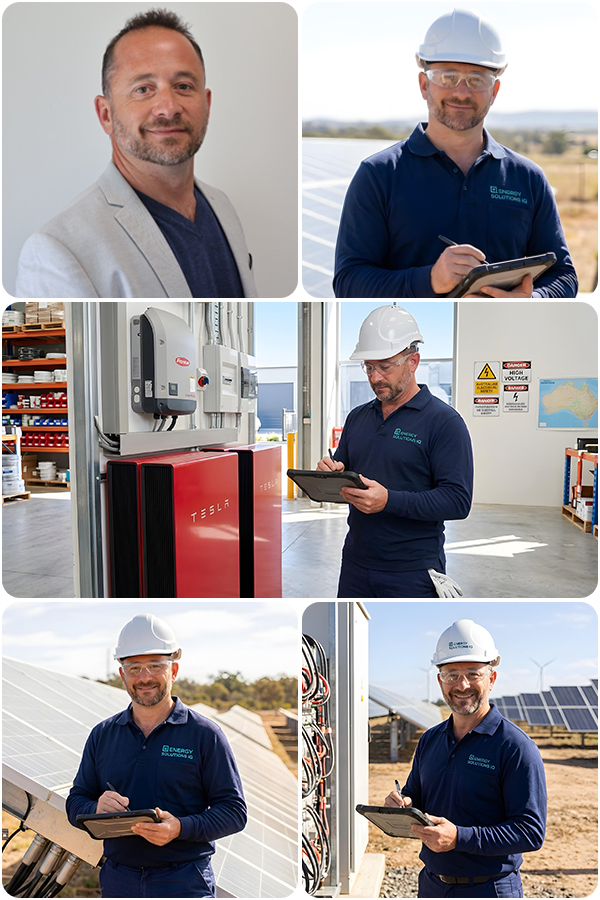
Risk frameworks designed the way regulators assess them
Energy Solutions IQ is led by Michael Miskulin, who spent more than 14 years inside the Electrical Regulator leading audits, investigations and enforcement action, and contributing to standards development and regulatory strategy.
We know the question an investigator will ask about every inspection interval and every deferral, so we build frameworks where each decision is documented and defensible.
Explore our electrical assurance services
Asset registers, lifecycle assurance and audit-ready evidence.
ExploreServiceElectrical Expert Witness & Regulatory AdvocacyIndependent expert reports and advocacy for disputes, claims and investigations.
ExploreServiceElectrical Installation Inspection & Certification SupportLicensed inspection and certification of new and modified installations.
ExploreServiceGovernance, Policies & Competency FrameworksPolicies, accountability and competency that prove officer due diligence.
ExploreServiceIncident Preparedness & Regulatory Investigation ReadinessAudit-ready evidence and a clear plan before an incident or investigation.
ExploreServiceInspection, Testing & AssuranceLicensed, independent inspection and testing that produces regulator-grade evidence.
ExploreServiceRegulatory Assurance & ComplianceIndependent verification that your electrical compliance is defensible, not assumed.
ExploreServiceTechnology‑Enabled Risk & Situational AwarenessReal-time monitoring and dashboards that turn data into compliance evidence.
Explore- Electrical safety for Commercial Offices & Workplaces
- Electrical safety for Councils & Public Open Space
- Electrical safety for EV Charging Infrastructure
- Electrical safety for Public & Commercial Car Parks
- Electrical safety for Quick Service Restaurants
- Electrical safety for Schools & Early Learning
- Electrical safety for Service Stations & Fuel Retail
- Electrical safety for Sport & Recreation Facilities
- Electrical safety for Supermarkets & Retail
Risk-based electrical management: common questions
What is risk-based electrical systems management?
It is an approach where inspection, testing and maintenance are set by the criticality and consequence of failure of each electrical asset, rather than fixed calendar schedules, with every decision documented.
Is risk-based maintenance accepted by regulators?
Yes, provided it is evidence-based. Regulators expect controls proportionate to risk. What matters is that criticality, risk ratings and decisions are documented and reviewed.
Will a risk-based approach reduce our maintenance costs?
Usually, yes. Effort shifts from low-risk assets to high-consequence systems, reducing unnecessary work while improving safety and reliability where it matters.
What is an electrical risk assessment?
An electrical risk assessment identifies hazards such as shock, arc flash, ignition and degradation, rates their likelihood and severity, and sets proportionate controls. It forms the core of our risk-based framework.
How does this connect to board reporting?
We align governance reporting to electrical key risk indicators so executives can demonstrate continuous oversight of electrical risk under their due diligence duties.
Know where your highest electrical risks sit, and prove they are controlled.
Tell us about your sites and systems. We will come back within one business day.
Assurance first. Done once. Done right.